Paid Slaveholders

by©️Leslye Joy Allen
In my previous essay “The Zong Slave Ship Massacre of 1781 and the Trans-Atlantic Chattel Slave Trade,” I noted that this massacre of over 130 Africans brought the cruelty and inhumanity of the slave trade to the attention of the public in England.
It still took years of pressure and the public’s growing anti-slavery sentiment to get slavery abolished in the British colonies in the West Indies, South America and Canada. The Slavery Abolition Act was passed in 1833 due to a decrease in profits on plantations and an uptick in slave rebellions. This act freed 800,000 enslaved Africans across the British colonies in the Caribbean, Canada and portions of South America. Yet, all the slaves received was freedom. There was no compensation and no material help for any of the formerly enslaved Africans.
Yet, Britain compensated the former slave owners. I have to thank one of my readers who, after having read my essay on The Zong Massacre for the following reminder:
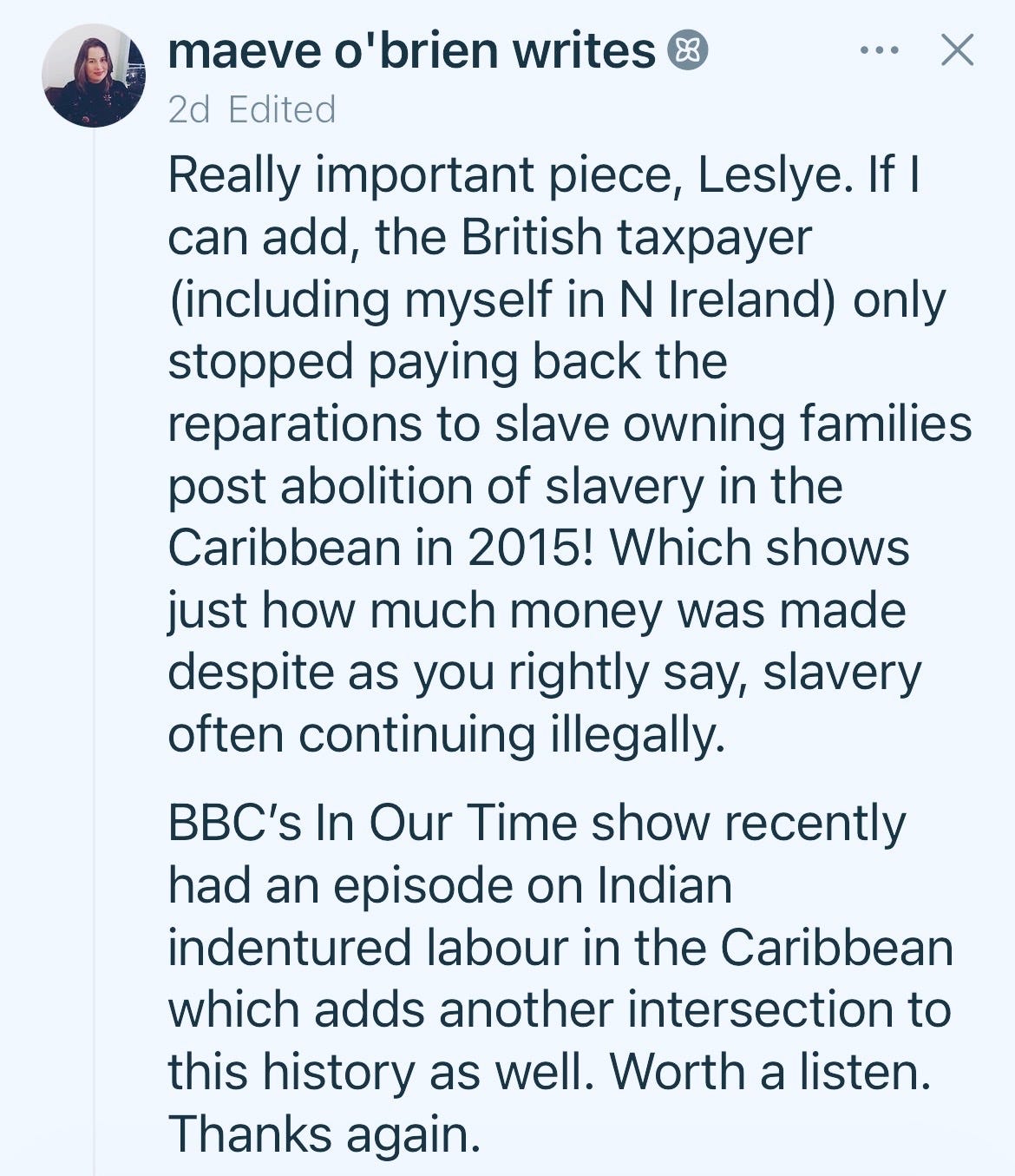
The Slave Compensation Act was passed by the British government in 1837. The British government set aside £20 million pounds which would be the equivalent of £20 billion pounds today. In American currency it would amount to nearly 27 billion dollars today to compensate former slaveholders.
Nathan Mayer Rothschild, a German-born British financier of the Rothschild family that all of us know, and Moses Montefiore, an Italian Sephardic Jew born in London, loaned Britain the money to compensate the British slaveholders who lost their slaves while British taxpayers repaid this debt from 1837 to 2015.
Sanchez Manning, writing for the Independent, noted that once the compensation papers for former slaveholding families were finally released for examination, the evidence proved that slavery created an enormous amount of wealth for many members of England’s aristocracy:
“Dr. Nick Draper from University College London, who has studied the compensation papers, says as many as one-fifth of wealthy Victorian Britons derived all or part of their fortunes from the slave economy.”— Sanchez Manning, the Independent
To this day, the descendants of these British beneficiaries of the Slave Compensation Act of 1837 remain wealthy and influential. They sit in Parliament. They influence British and world society with their wealth.
The slaves who were freed in Canada, South America and the Caribbean received nothing but the open road. The majority were initially homeless, unemployed and granted no assistance whatsoever by the British government, no access to capital and education.
And yet, we, their Black descendants all over the Americas are still here after fighting tooth and nail for our right to our own humanity, making bricks without straw, finding a way out of no way. People classifiable as “white” will never know what we know because they have no experience at what we have experienced.
I am an Independent Historian, Oral Historian and Dramaturge. Please consider supporting my work and research with a few bucks for Coffee and Eggs via my CashApp or PayPal or become a paid subscriber to me on Substack to help me sustain my research and commentary.
Related Essays:
Britain’s colonial shame: slave owners given huge payouts after abolition
Although I watch 'Bridgerton' on Netflix, in the back of my mind, I'm disturbed at the "diversity" of the "Lords" and Ladies. It's entertaining to watch the power they have; however, I wonder if those same Black and Asian lords made their money enslaving their own people. It's all fantasy, but maybe Shonda will do a prequel on how they made their wealth!
Honoured to be included in one of your posts Leslye - this is such important work. Surprisingly, the Bank of England did a really excellent exhibition on tracing slave owner reparations a few years ago - mapping how many prominent British families got their start through money made from the enslavement of human beings. Worth a browse! https://www.bankofengland.co.uk/museum/whats-on/slavery-and-the-bank