Code Noir: Political Blackness

by ©️Leslye Joy Allen
I remember the first time I heard the surname “Das.” It belonged to a beautiful Black American woman here in my native Atlanta named Mrs. Gloria Das who was a member of my childhood church. Mr. Das, her husband, was from India. It did not take a rocket scientist to understand how they became a couple. He was as handsome as she was beautiful. Mrs. Das was also the first poet that I personally knew.
When I returned to college to finish the Bachelor’s degree I had previously abandoned, I read the book “A Passage to India” where I ran into the name “Das” again. The book was published in 1924. It was a fictionalized account of the cultural clashes between East Indians and the British Empire that colonized and exploited Indians. In this book an Indian man accused of raping a British woman felt like the same sick and false accusations often brought against Black American men in the late nineteenth to mid-twentieth centuries.
In the book I noticed a reference to an Indian man living under British occupation and rule in India who was described as a “little Black man.” I have said this before in a previous essay called No Contradictions which gives you an early Greek definition of “Black” as a geographical indication of where “Black folks” were identified and located from around 430 to 440 BCE. If you haven’t read it, that’s cool. But, it’s worth your time since what I wrote is rarely presented in most basic History lessons.
This essay you’re reading right now is designed to expand what you know about Black women in the Western World and how that adjective/noun “Black” does not exclusively belong to us in the United States nor do we always apply it with the same utility and grace as some others do.
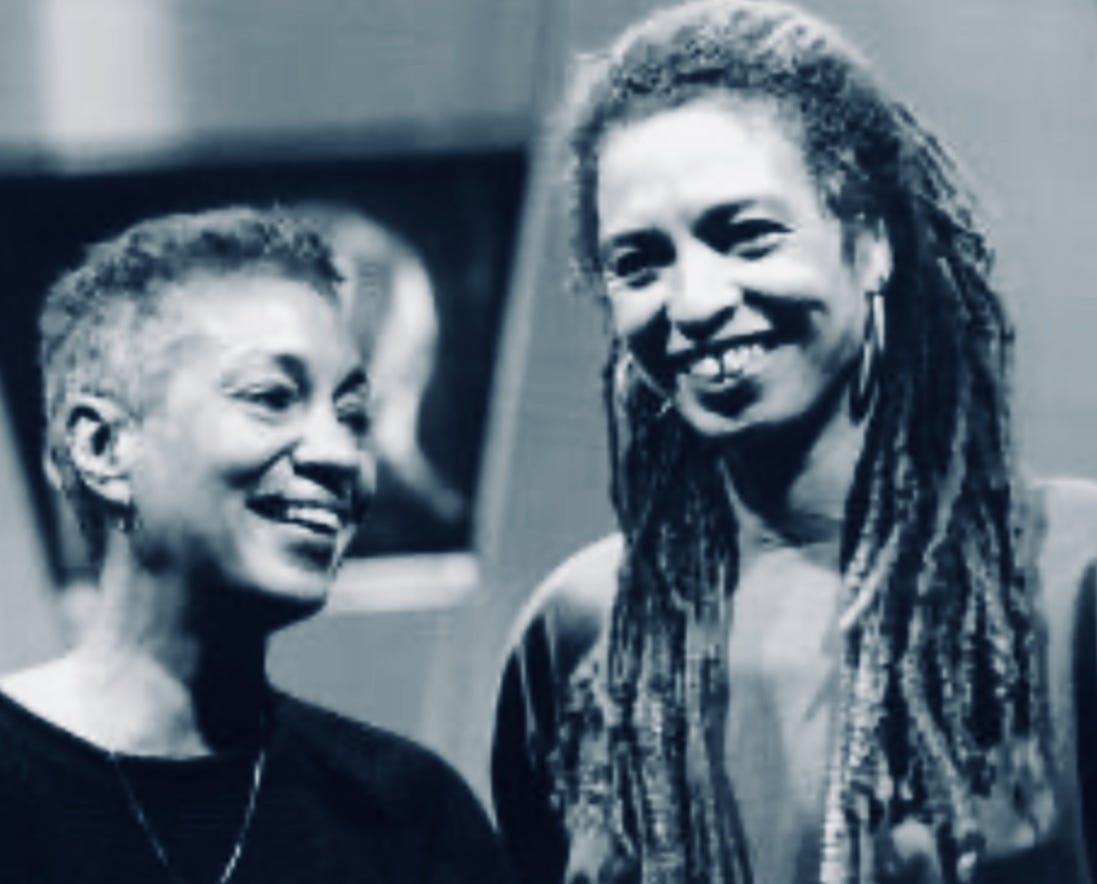
(Feminists/Activists June Jordan and Angela Davis in Pratibha Parmar’s documentary A Place of Rage in 1991)
One of my college classmates and I discussed when the word “African-American” came into common use. Neither one of us had anything against it. Yet, we weren’t all that enamored with the term either. She and I both grew up using “Black” as our identification.
She said she preferred “Black” because, “My Mama is from Trinidad and my Dad is from the Bronx. Both of them are ‘Black,’ but only Daddy is ‘African-American.’” I understood her preference for certain terminology in much the same way I understood when scholar-activist-revolutionary Dr. Angela Davis referred to herself as “Queer” rather than as “Lesbian.”
Terminology is not only generational, it is also a reflection of how you see yourself and others who you think are like you and those you think are not like you. The terminology you use to define yourself determines your proximity and your affinity to others.
What has disappeared (or has been omitted) from many trajectories about Black women is the use of the term “Black” as not only a physical and/or racial definition, but its embrace as a form of protest and SOLIDARITY.
The first time I had an inkling about that solidarity was when I began to explore the writings and feminist ideologies of Black women who lived in the Western hemisphere but not specifically in the United States.
I was in my early thirties when I discovered that scholarly and activist women from Africa, the Caribbean and India who lived in Great Britain all called themselves “Black.” By the 1970s this was typical. Black UK feminists did so to counter British racism and sexism. They also did so because they fully recognized both their genetic and geographic affinity with each other. Moreover, since the United Kingdom treated them all as “coloured” people to be discriminated against, they claimed what is referred to as “Political Blackness.”
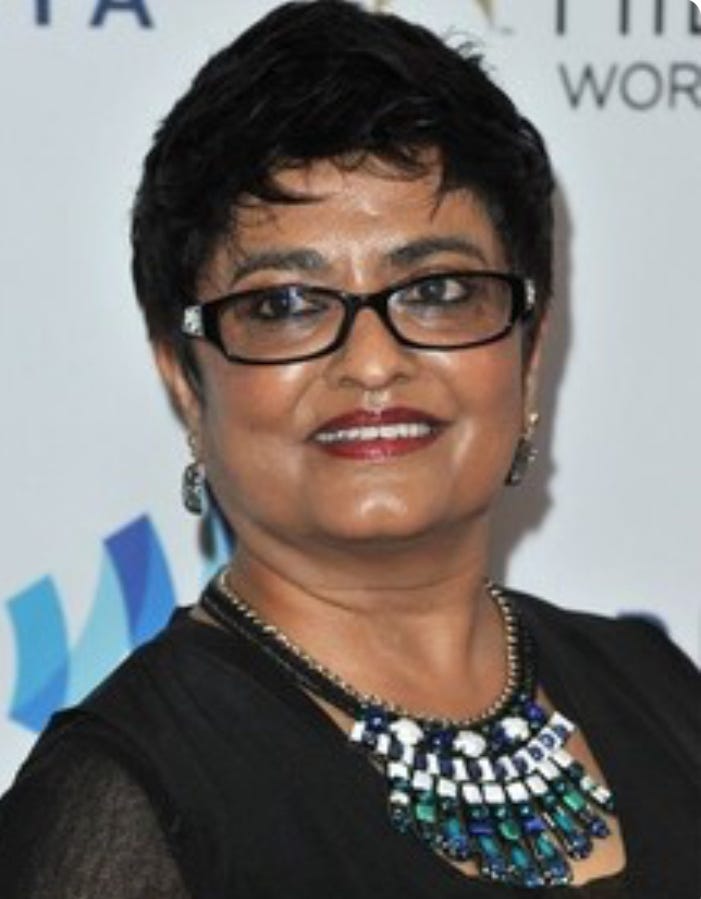
(Filmmaker Pratibha Parmar)
They studied Black American women and white American women who were feminists and social justice activists. While their system of fighting racism and sexism was not perfect, they studied how U. S. feminism was woefully problematic since it often excluded women of color; and even when it did acknowledge women of color, the inclusion was lukewarm.
In the UK “Political Blackness” never denied any woman’s heritage whether her roots were in India, Africa or the Caribbean. Yet, British racism still had a slightly different edge than US racism. Whether born in Great Britain or naturalized in Great Britain, Africans, Caribbean peoples, and Indians were looked at as “subjects” since most of them had roots in nations that had been colonized by Great Britain at one time or another. In other words, if you were not white. you were rarely treated like a citizen well into the late 20th century.
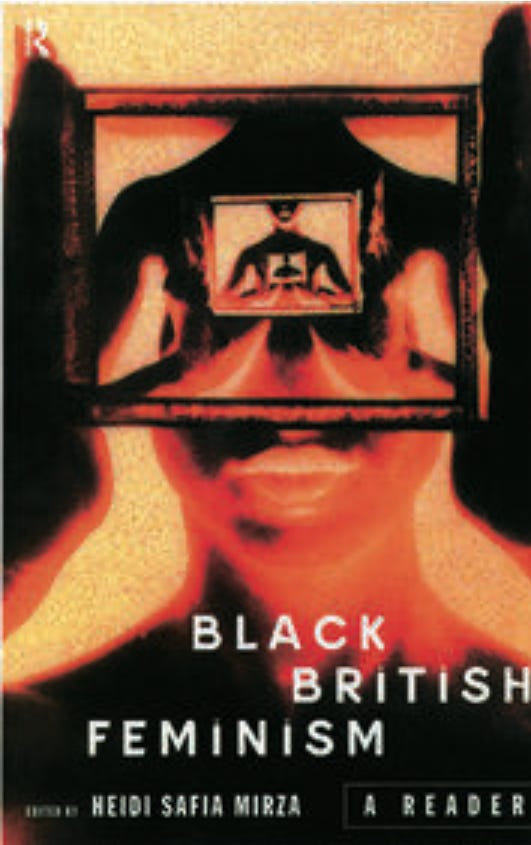
I remember being thrilled at the depth of a book called “Black British Feminism: A Reader,” that was edited by Heidi Safia Mirza, published in 1997 by Routledge. It featured the work of 23 women from Africa, the Caribbean and India on nearly every problem confronting women. It forced me to look further than the United States for solutions. It lessened my American-centricity. It taught me that I had sisters everywhere who had ideas that I had never thought of.
I am an Independent Historian, Oral Historian and Dramaturge. Please consider supporting my work with a few bucks for Coffee and Eggs via my CashApp.
Thanks for helping us in the US get our heads out of the echo chamber and think about the history of the world outside our cage.
I just found a used copy of black British feminism on biblio.com for under $20 and have ordered it.
Our granddaughter‘s preferred T-shirt says “read books and fight the patriarchy“.
Thank you again.
Thank you for always speaking truth.